For lake owners
Feeding Pond Fish in Autumn: How to Adjust and When to Stop
2 min read
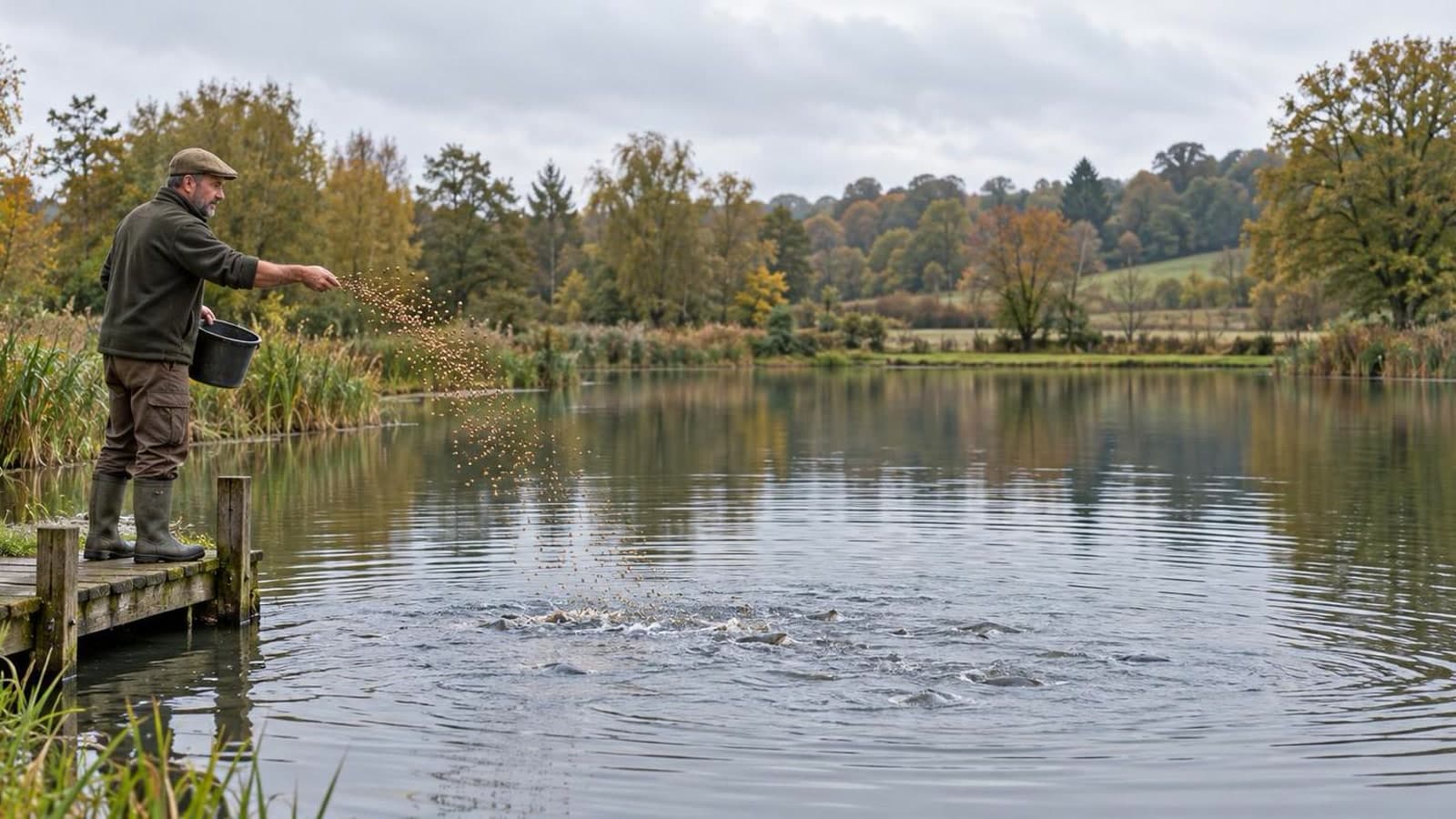
Autumn overfeeding often begins with good intentions. Fish become less active, so an owner offers more or richer feed. Yet as water cools, digestion slows in many pond species. Uneaten pellets settle, worsen water quality and add a needless load before winter. Use the water and the fish, not the calendar, as your guide.
Measure water, not afternoon air
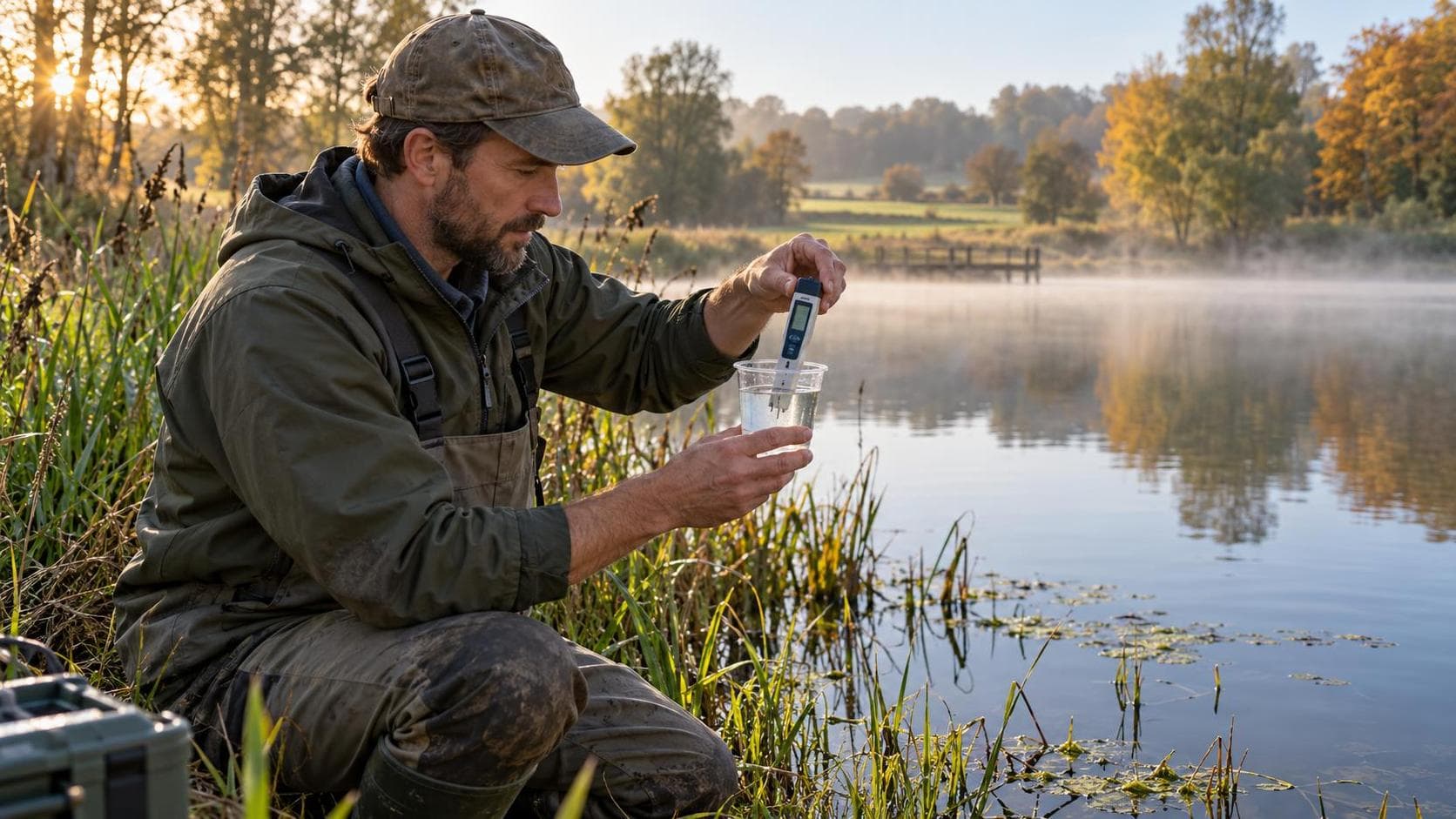
Air temperature can swing sharply in a day while a pond changes more slowly. Measure at the same time and place, ideally near feeding depth. Record weather, clarity, wind and how quickly fish arrive. One cold night is not a reason for a sudden change; a trend over several days is more useful.
Reduce portions without guessing
Offer less than the normal summer portion at one observation point. If pellets remain or the response is weak, reduce the next feed instead of topping up. After a cold snap, low-oxygen signs, cloudy water or unusual behaviour, skip the feed and check conditions. There is no universal kilogram-per-hectare answer: species, biomass, density, natural food, temperature and the exact feed all matter.
Feed choice and a safe pause
Check the product’s species and temperature range, expiry date and pellet size. Keep bags dry; bread, kitchen scraps and random grain are not a controlled ration and can foul water. Pause when water remains colder, fish rarely approach, pellets remain and activity has declined for several days. Thresholds differ for carp, trout, sturgeon and ornamental fish, so follow product guidance and local professional advice.
A five-minute log
Record date, time, water temperature, feed type and amount, arrival time, leftovers, odour, colour and clarity. This reveals patterns and gives staff a shared rule. Review aeration and winter preparation as well: feed cannot correct low oxygen or poor water quality.
Keep the season organised. With Pegly, owners can configure a peg map, sessions, prices and online booking, keeping daily pond work separate from scattered calls.