For lake owners
Pond algae bloom: how to identify it, respond and prevent it
5 min read
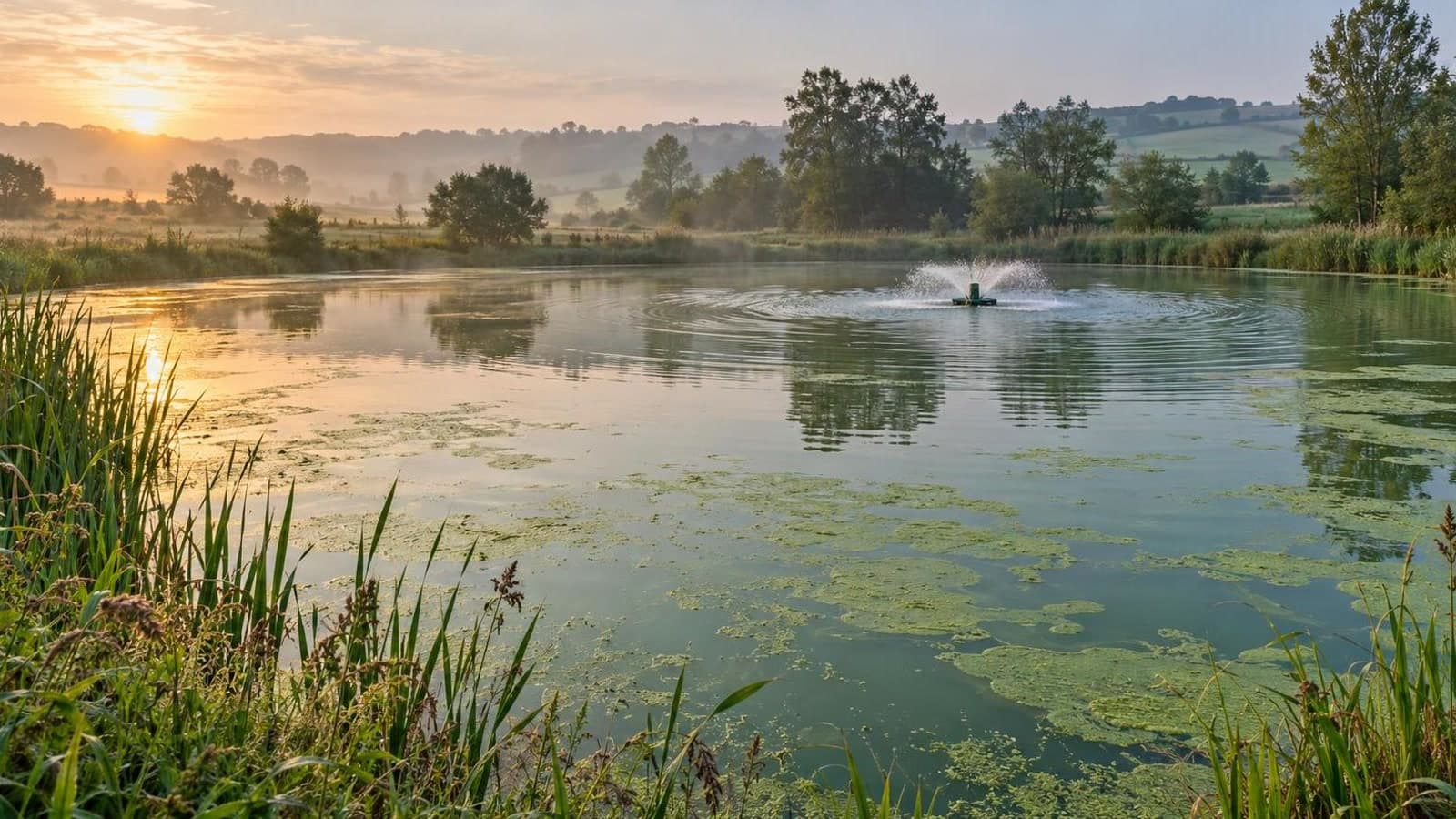
Bright green water does not always mean that the pond has already been lost. But a sudden change in the color, smell and behavior of the fish is a reason to act on the same day. During massive algae development, the main risk often appears before dawn: photosynthesis stops at night, and algae, fish and microorganisms continue to consume oxygen.
Below is a practical procedure for the owner of a fishing reservoir. It will help distinguish blooms from filamentous algae, stabilize conditions for the fish, and find the cause. This is not a substitute for laboratory analysis or the recommendations of an ichthyologist: the composition of the water, the species of fish and the approved drugs differ.
First determine what exactly you see
A "bloom" is usually called the massive development of microscopic algae or cyanobacteria in the water column. The water turns green, turquoise, brown, or looks like spilled paint. Filamentous algae form strands and mats near the shore, and duckweed has individual small leaves on the surface. Each problem requires a different tactic, so don't buy a product based on the color of the water alone.
Explore the pond in several places, take a photo, fill with water in a transparent container and let it stand. If possible, take a sample for the laboratory. If there is a thick blue-green mass on the surface, foam or a strong odor, limit the contact of people and animals with the water until the cause is identified.
Check the oxygen before fighting the color
The most useful indicator in the first hours is dissolved oxygen. Measure it before dawn, when the value is usually the lowest, and repeat in the afternoon. One day's measurement can create a false sense of security. Record the temperature, pH, clarity, water level and weather for the last few days together. Not only the number is important, but also the sharp daily change.
Alarming signs are visible even without a device: fish gather near the inlet or aerator, grab air near the surface, become lethargic, refuse food. If this happens, rescue the oxygen regime first, and do not try to make the water clear overnight.
What to do immediately
- Enable aeration and agitate a sufficient area without raising bottom sediment unnecessarily.
- Temporarily reduce or stop feeding. Uneaten feed adds organic matter and loads the oxygen balance.
- Remove dead fish and dense floating mats. Their decomposition consumes even more. oxygen.
- Stop fertilizer and dirty runoff. Check ditches, fields, septic tanks, and downspouts after rain.
- Organize repeat measurements. Record morning, day, weather, color, and fish behavior.
Partial water replacement will help only when the source is of better quality and the temperature will not create additional stress. Do not discharge suspect water into a natural watercourse without checking local regulations. If there is a massive fish kill, strong odor, unknown discharge or suspected toxins, contact the laboratory and appropriate local authorities.
Why it is dangerous to act randomly
Sudden destruction of a large mass of algae can worsen the situation: the dead biomass will begin to decompose and take even more oxygen. An algaecide, copper-containing agent, or biologic is not a one-size-fits-all answer. The safe dose depends on the species of organism, alkalinity, temperature, water volume, fish and legal restrictions. Do not mix drugs and do not repeat dosages "for reliability". It is better to agree with a specialist about chemical treatment for fish ponds.
Find a source of nutrients
Flowering is supported by an excess of nitrogen and phosphorus, warm stagnant water and strong lighting. The source can be uneaten feed, overcrowding of fish, leaves and grass clippings, manure from fields, domestic runoff, or a long-term supply of nutrients in the bottom sediment. If you remove only the green color, but not the source, the problem will return.
- compare the amount of feed with actual consumption;
- check catchment after rain and water entry point;
- estimate fish density and guest load;
- do not leave cut vegetation at the water's edge;
- plan buffer strips, aeration or other long-term changes based on the results of the analysis.
Plan for the first seven days
On the first day, stabilize oxygen, stop excess organics and collect baseline measurements. On the second or third day, repeat the morning and afternoon measurements, check the flow sources and submit the samples for analysis. By the end of the week, decide whether spot intervention, feeding correction, aeration repair, or drainage work is needed.
Log: date, time, temperature, oxygen, pH, transparency, wind, precipitation, food and fish behavior. Such a series of data is more useful than a random photo of green water: it shows whether the situation is improving and what has changed before the next outbreak.
How to reduce the risk of recurrence
Prevention consists of regular control, not a single remedy. Check aerators for heat, adjust feeding to temperature and fish appetite, keep out fertilizers, remove organic debris, and watch for changes in transparency. Plan water analysis before the problem season, not after the fish die.
Communication is also important for a paid reservoir. If water quality or work affects the availability of sectors, inform guests in advance and do not accept reservations for unsafe areas. On the reservoir page in Pegly, you can show sectors, sessions, prices, photos and rules; if necessary, the owner can remove the reservoir from the publication.
Don't mask the symptom — manage the cause
The correct sequence is simple: recognize the type of problem, check the oxygen, stabilize the fish, find a source of nutrients, and only then choose a treatment method. It's slower than a random canister of greens, but much safer for the fish and the budget.
Create your Pegly pond page with a sector map, sessions, prices and booking rules.


