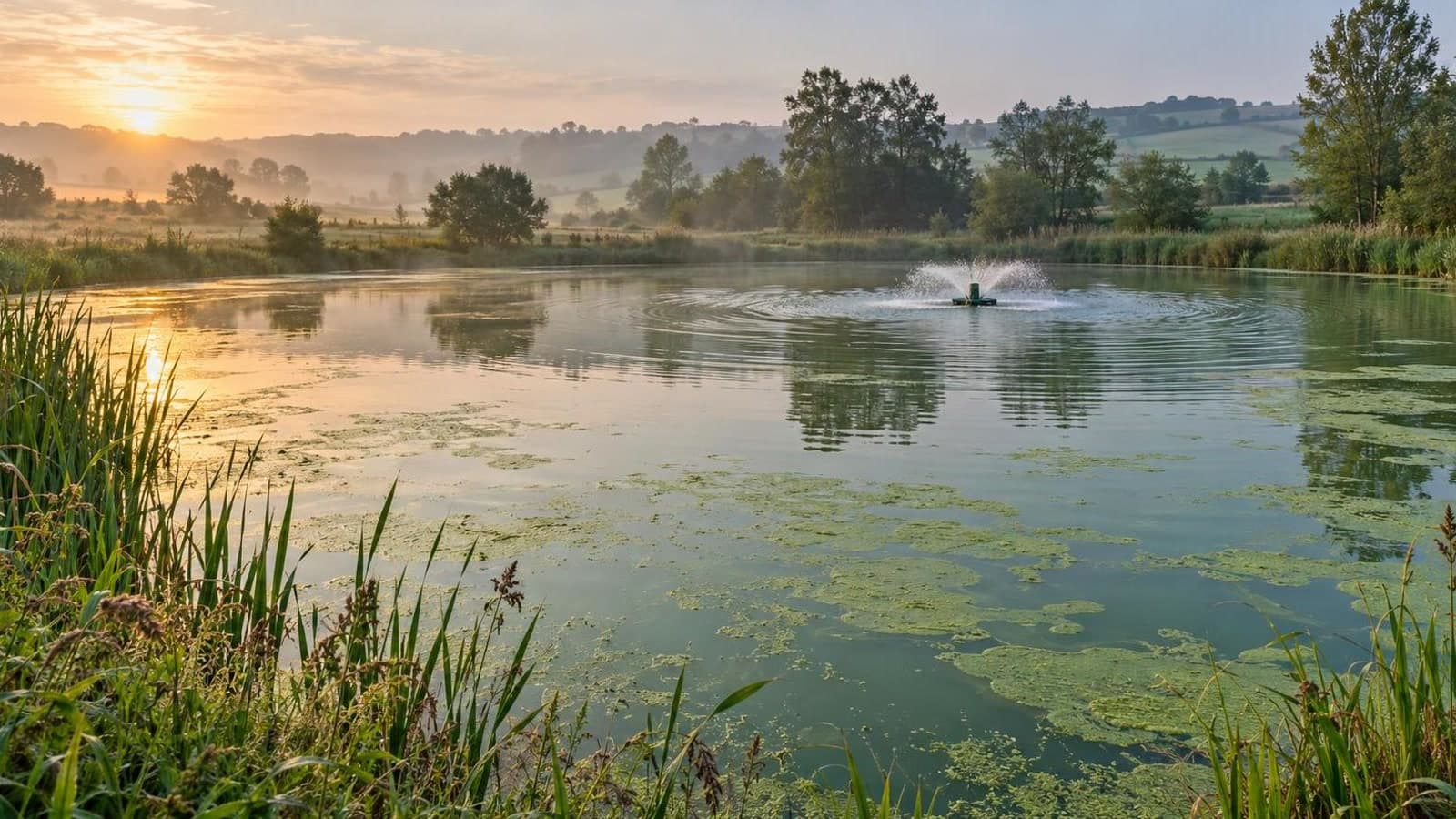
For lake owners
Pond water pH: how to test it and respond safely
2 min read
One reading does not describe a pond. pH is usually lower near dawn and higher late in the day because of photosynthesis. Watch the trend and fish condition, not only the number.
What pH shows
For many pond fish, 6.5–9.0 is a practical reference, but stability matters more than a perfect 7.0. High pH in warm water increases toxic un-ionised ammonia, so check temperature, oxygen, ammonia and alkalinity too.
How to test correctly
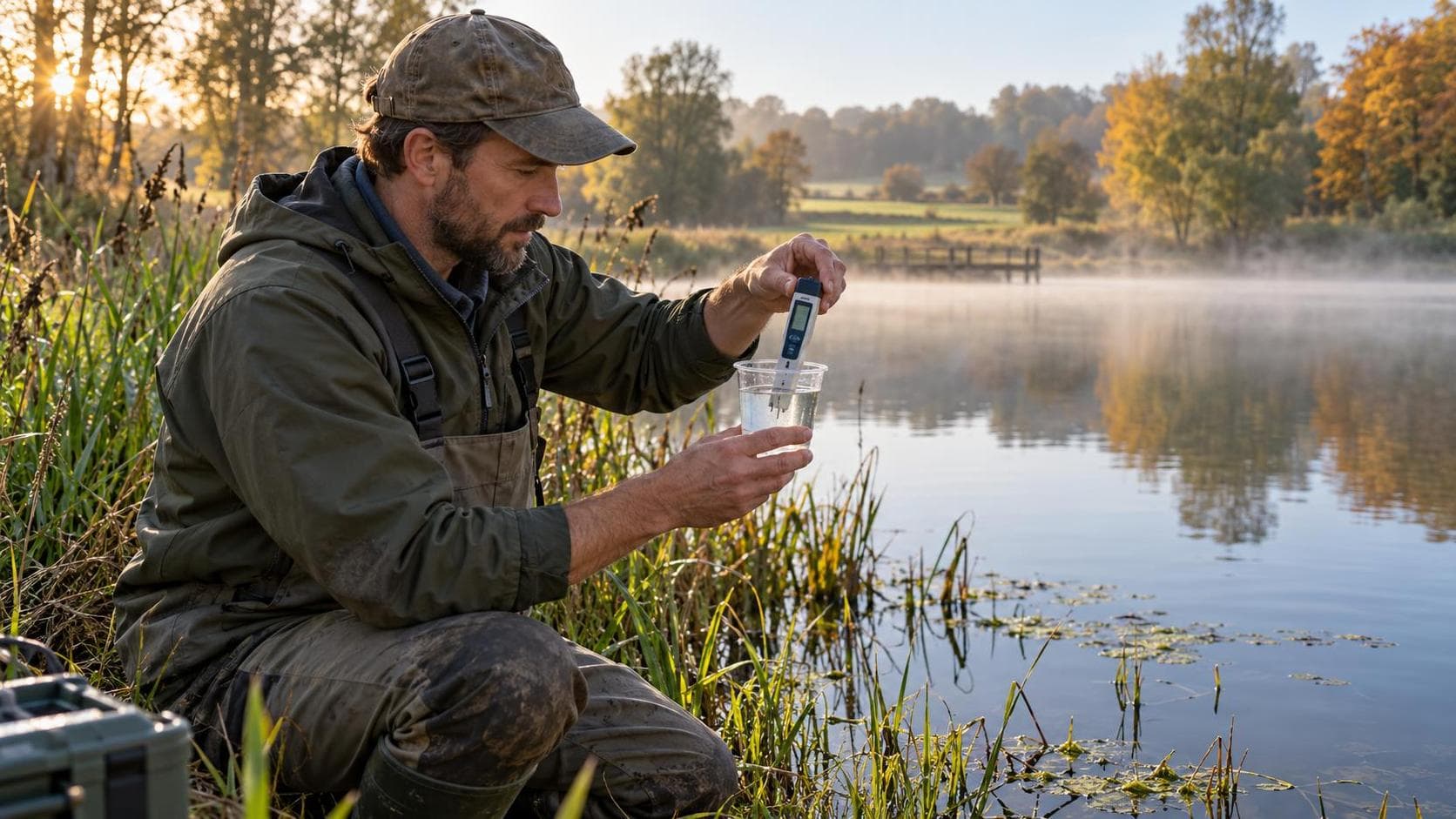
Take a clean sample 20–30 cm below the surface. Calibrate the meter with pH 7 buffer and preferably pH 4 or 10. Rinse the probe, wait for stability, and record time, place, temperature, clarity and fish behaviour.
Why two daily tests help
Test near sunrise and late afternoon at the same place. A wide swing often means strong algae activity and weak buffering. Total alkalinity shows how well the water resists rapid pH change.
Responding to an abnormal result
Confirm the result first. If fish gasp, check oxygen and start aeration immediately. Investigate low pH with alkalinity, inflow, rainfall and sediment; calculate liming from analysis. For high afternoon pH, assess bloom and dawn oxygen. Never guess chemical or acid doses.
Monitoring schedule
Test weekly at a consistent time in stable conditions; after storms, heat, blooms or stocking, test morning and afternoon. Log pH, temperature, alkalinity, oxygen, clarity and actions. Persistent deviation, rapid change or fish deaths require a laboratory or specialist.
Takeaway
A safe decision starts with a repeat test and the cause. Organise your fishery: with Pegly, publish a page, map pegs, set sessions and prices, and accept bookings without overlaps.