For anglers
Float Fishing for Beginners: a Simple Rig and First Session
3 min read
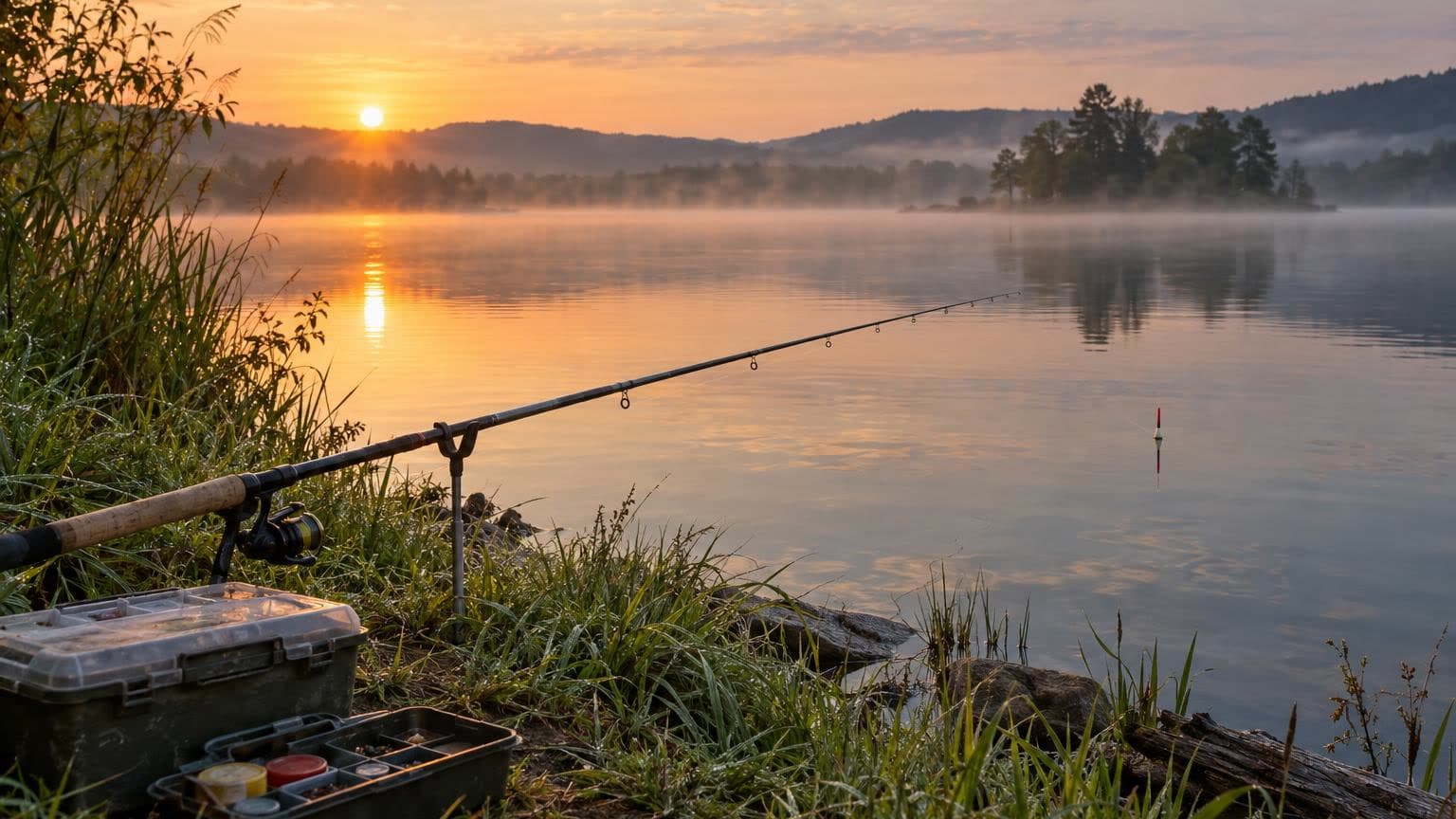
You don't need a suitcase of tackle for your first float fishing. You need a rod, a fishing line, a float, some pellets, a leash and a hook, selected as one system. If the float is overloaded or the hook is lying in the mud, even a good nozzle will not save.
What rod to take
On a pond without a strong current, it is easiest to start with a fly rod of 4-5 meters. It is light, does not require a reel and gives an accurate feed under the bank. A match or bologna rod with a reel is needed when you have to cast farther or control the rig in the current. Check whether it is comfortable to hold the rod with an outstretched hand: excess length quickly tires.
Basic equipment
- Main line: monofilament 0.16-0.20 mm for crucian carp, roach and small carp.
- Lead: 0.02-0.04 mm thinner than the main line, long 15–25 cm.
- Float: 1–2 g for still water; bigger only in wind or current.
- Hook: under the size of the jig, not the biggest fish you hope to catch.
Spread the load so that the bulk of the pellets are above the leash and the small bait is closer to it. A thin antenna should remain visible in the water, not the entire body of the swimmer. Clamp the pellets carefully without damaging the line.
How to set the depth
Start at the depth where the tip touches the bottom or hangs a few centimeters above. Make a control cast: if the float is lying, the depth is too great; if the antenna drops or the rig drags, check the load, current and bottom. On silt, do not put the heavy part of the rig on the bottom - the nozzle can disappear in the sediment.
Nozzle, bait and bite
A worm, maggot, corn or dough is enough to start - depending on the type of fish and the rules of the reservoir. Feed in small portions: a few balls at the beginning, then only after the pecking subsides. It is not necessary to cut for every tremor. Wait for the float to confidently move to the side, dive or rise.
Plan for the first session
- Choose a clean place without branches overhead.
- Measure the depth in two or three points.
- Throw a small portion of bait.
- Fish for 20-30 minutes on one distances.
- If there are no bites, change the depth or nozzle, and not all at once.
Take an extractor, a bag and a garbage container. Check the rules of the reservoir, the allowed amount of gear and the catch rate.
Need somewhere to practise? Browse fishing waters on Pegly and check available pegs before travelling.