For lake owners
How to Remove Pond Silt: Diagnosis, Methods and Work Plan
3 min read

Silt does not automatically mean a pond is failing. A thin organic layer is natural, but years of accumulation reduce depth, store nutrients and make oxygen management harder. The costliest mistake is hiring machinery before finding out where the deposits are and why they formed.
Map the problem before pricing the job
Lay out several transects and measure water depth at repeatable points. A marked probe or clear core sampler can estimate the soft sediment. Mark inflows, feeding areas, weed beds, shallows and weak-circulation zones. One reading beside the dam cannot represent the whole pond.
Record colour, smell and plant fragments. If fish gasp at the surface, the water changes suddenly or mortalities occur, check dissolved oxygen and basic water parameters first. Earthworks are not emergency treatment for an oxygen crash.
Stop the source of new deposits
Silt will return if runoff carries soil from tracks, banks erode, leaves remain in the water or feed is wasted. Inspect the catchment after rain, stabilise vulnerable banks, remove debris and review feeding practice. Prevention will not remove the old layer, but it protects the result.
Choose a method that fits volume and access
- Suction dredging. A small dredger or slurry pump treats selected areas without draining the whole pond. It needs a dewatering area, safe access and turbidity control.
- Dry mechanical excavation. An excavator is productive where the pond can be drained safely. Plan fish rescue, water diversion and storage of wet material beforehand.
- Manual removal. Useful around an inlet or short bank section, but unrealistic for a large commercial pond.
- Biological products. Some may help break down organic matter under suitable temperature and oxygen conditions, but they do not remove a thick mineral layer.
Protect fish and water
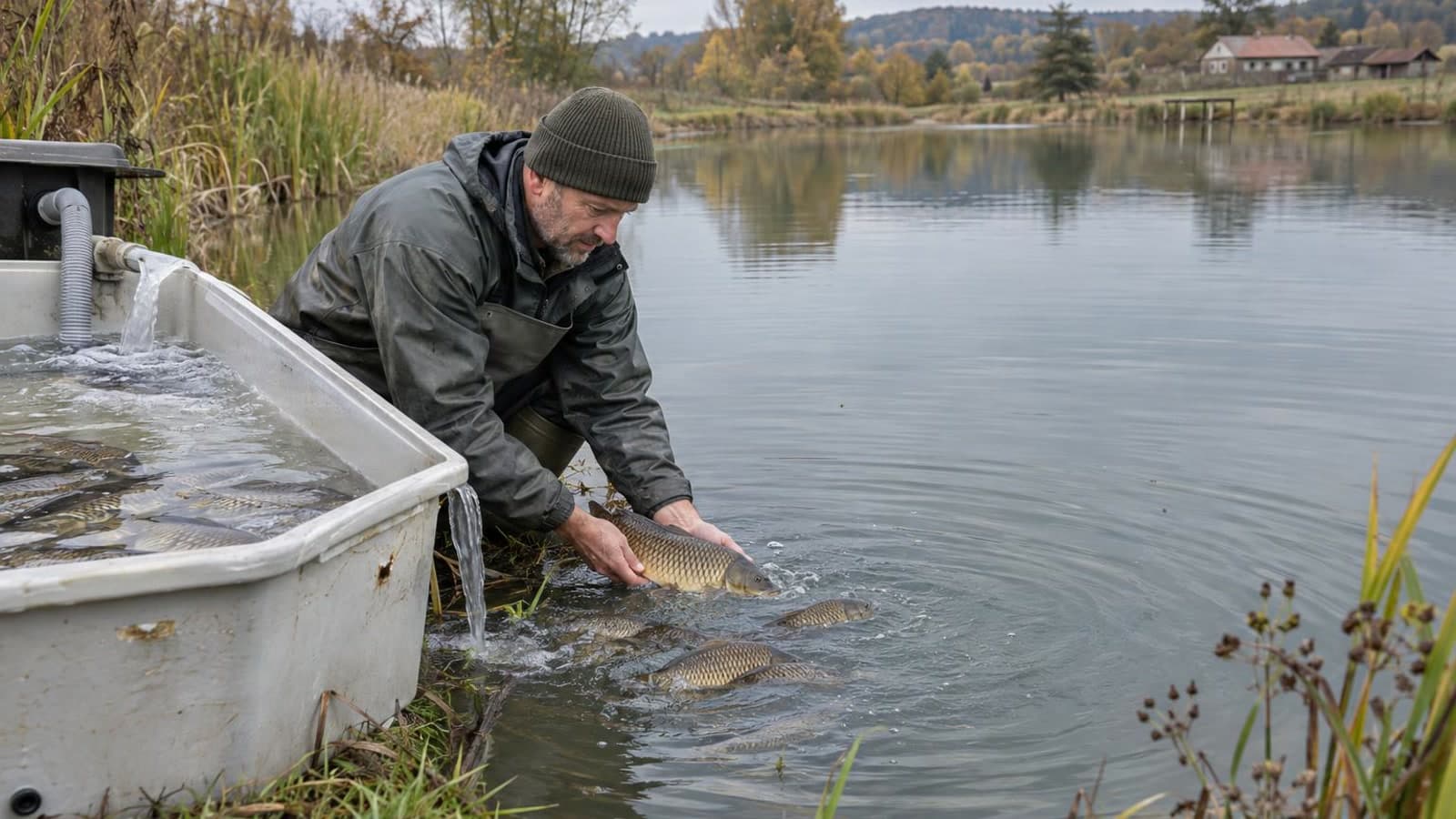
Check local requirements for water discharge, sediment handling and shoreline work, and involve an appropriate specialist on major projects. Work in sections and monitor oxygen and turbidity. Moving fish requires prepared tanks, aeration and a short safe route.
Write a useful contractor brief
State the area and average sediment thickness, target depth, extraction points, dewatering location, machinery route, destination of material, closed zones and stop-work thresholds. Ask whether haulage, bank reinstatement and clean-up are included.
Reopen in stages
Check bank and platform stability, water clarity, oxygen and fish behaviour. Reopen safe areas gradually, and update sector maps and rules where depths or access changed.
Update sector availability in Pegly
Pegly lets an owner place sectors on a map, set sessions, prices and rules, and unpublish the fishery during maintenance. Verified areas can then be reopened for booking requests.